First, What Magnitude 7.4 Means in Plain Language
Astronomers rank star brightness on the magnitude scale, where smaller numbers are brighter and each step of one magnitude is about 2.5 times the brightness. The "limiting magnitude" of a sky is the faintest star your eye can detect there. Under a typical city sky, that limit sits near magnitude 4. At Bryce Canyon, surveys have measured it at about magnitude 7.4 — close to the theoretical limit of human vision.
Those 3.4 magnitudes mean each star at the city limit is roughly 20 times brighter than the faintest star you can see at Bryce. And because faint stars vastly outnumber bright ones, the star count explodes: from roughly 300 visible stars in a city to about 7,500 here. You don't just see more stars — you see entire classes of objects that simply don't exist in an urban sky. Here's the inventory, roughly from easiest to hardest.
| Object | Visibility |
|---|---|
| Milky Way core | Naked eye, May–Sep |
| Andromeda Galaxy (M31) | Naked eye, fall evenings |
| Planets | Naked eye year-round |
| Meteor showers | Perseids (Aug), Geminids (Dec) |
| Deep sky clusters/nebulae | Naked eye + telescope |
| Zodiacal light | Late winter/spring evenings |
| Airglow | Darkest nights, long exposure |
The Milky Way Core
The headliner. From late spring through early fall, the central bulge of our galaxy — 26,000 light-years away in Sagittarius — rises in the southeast and crosses the southern sky. At Bryce it isn't a faint haze; it's a bright, mottled band with visible dark dust lanes (the Great Rift), dense star clouds, and a glow that, on a moonless night, can cast a faint shadow of your hand on light-colored rock. From the rim, the core hangs above the amphitheater itself — see which viewpoints face it.
Best viewing: May through September, in the hours after astronomical twilight, within about five days of a new moon.
The Andromeda Galaxy, With Your Naked Eye
Andromeda (M31) is the nearest large galaxy to our own, about 2.5 million light-years away — the most distant object most humans will ever see without optics. In a city it's invisible. At Bryce, once your eyes are dark-adapted, it's a clear elongated smudge in the constellation Andromeda, high overhead on fall evenings. Through a guide's telescope, its bright core and companion galaxies resolve beautifully. You are seeing light that left before our species existed; that line lands differently when you're looking at the real thing.
Planets and the Moon
Planets are bright enough to survive city skies, but dark, steady high-altitude air is where telescope views get good. Depending on the year and season you may catch Saturn's rings, Jupiter with its four Galilean moons, Mars, and brilliant Venus near twilight. Which planets are up changes month to month — one advantage of a guided night with Bryce Canyon Stargazing is that the telescope time is planned around whatever is best placed that week.
Meteor Showers
Meteors are a numbers game: the darker the sky, the more you count, because most meteors are faint. The major annual showers are dramatically better here than almost anywhere you've watched them:
- Perseids — peak around August 12–13. Warmish nights, up to 60+ meteors per hour under dark skies in a good year.
- Geminids — peak around December 13–14. Often the strongest shower of the year, with slow, bright meteors. Brutally cold at Bryce; dress accordingly.
- Lyrids (April) and Orionids (October) — smaller showers that are still worthwhile under a magnitude 7.4 sky.
Even on an ordinary night, expect a handful of sporadic meteors per hour once you're dark-adapted.
Star Clusters, Nebulae, and the Deep Sky
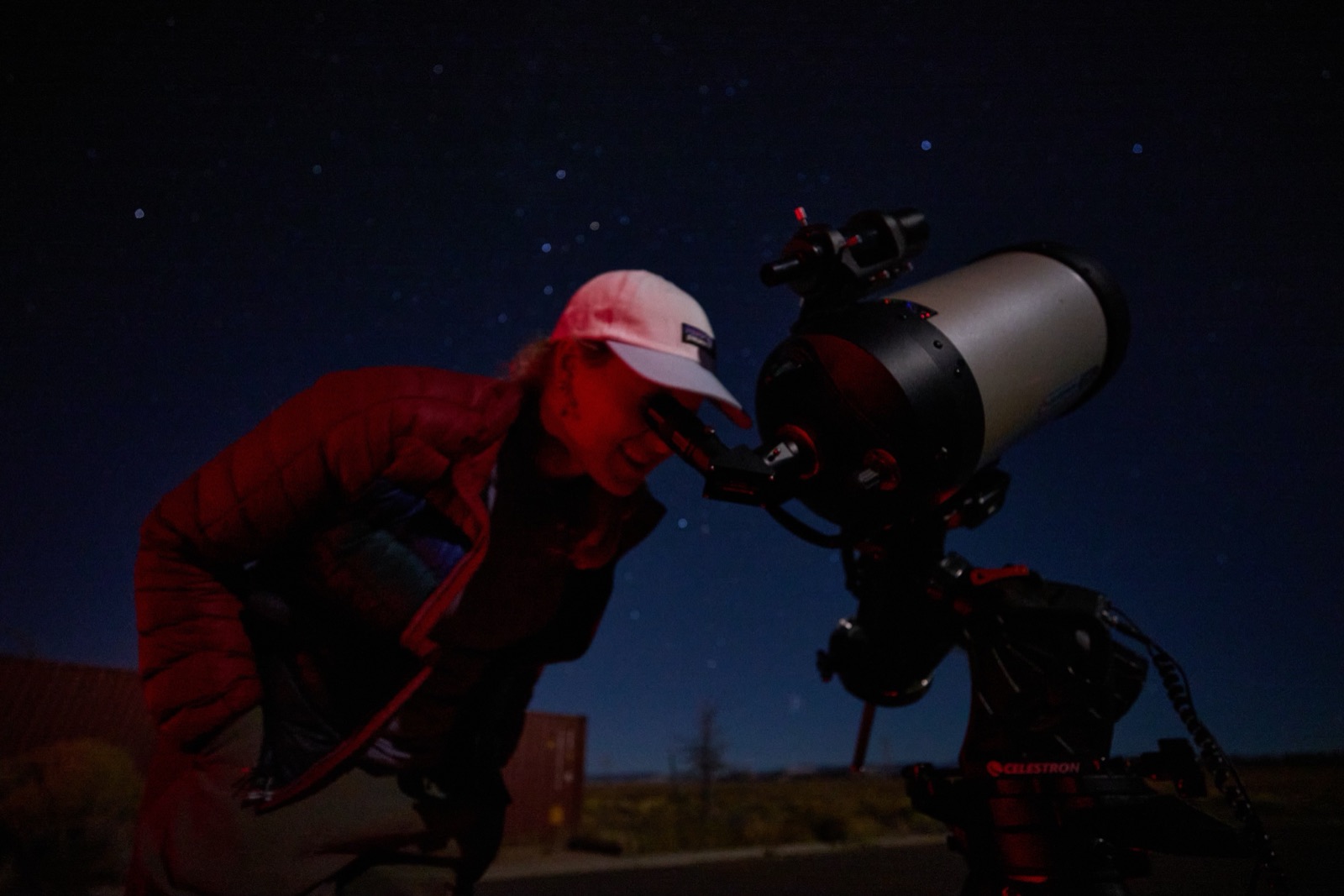
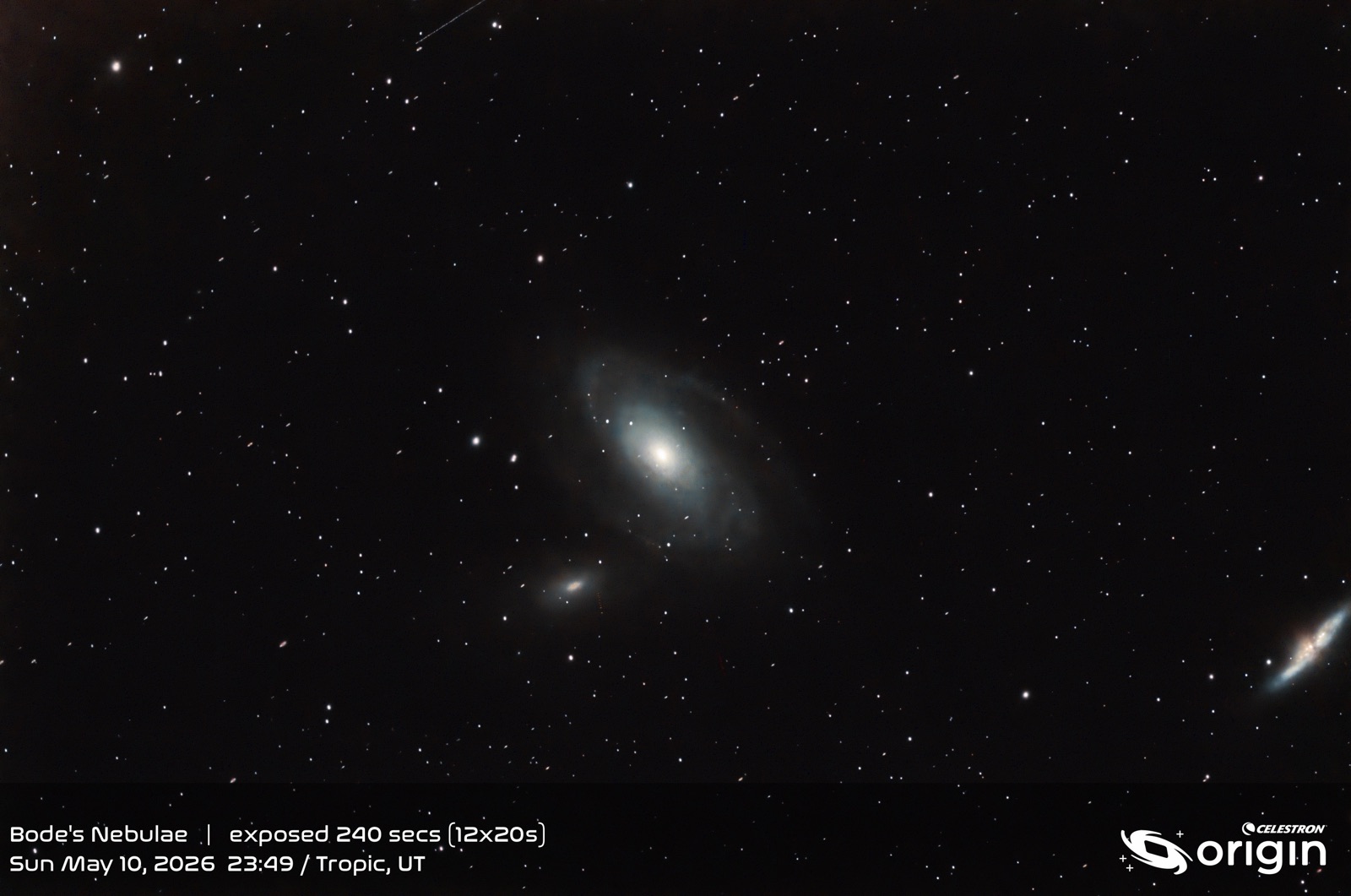
Naked-eye highlights include the Pleiades cluster (fall and winter), the Double Cluster in Perseus, the Beehive in spring, and the Orion Nebula as a visible glow in Orion's sword all winter. Add a telescope and the list jumps to globular clusters like M13, the Ring Nebula, the Lagoon and Trifid Nebulae in the summer core, and far more — objects a guide can find in seconds that might take a beginner an hour.
Want the Telescope Version of This List?
Small-group guided tours with Bryce Canyon Stargazing include telescope views of the best-placed planets, clusters, and galaxies on your night, with a guide narrating what you're seeing.
Book a Guided TourZodiacal Light: the Glow Most People Never See
This is sunlight reflecting off dust in the plane of our solar system, visible as a soft, tilted pyramid of light reaching up from the horizon. It's so faint that any light pollution erases it — which makes it a genuine dark-sky badge of honor. At Bryce, look for it above the western horizon for an hour or two after twilight in late winter and spring, or before dawn in the east during fall. Many longtime stargazers saw it for the first time at a place like this.
Airglow: the Atmosphere's Own Light
On the very darkest nights, the sky itself isn't perfectly black. Airglow is a faint natural luminescence — oxygen and other molecules in the upper atmosphere releasing energy absorbed from the sun, often appearing as subtle greenish or reddish bands near the horizon in long-exposure photos, and as a barely-there texture to the naked eye. Detecting it is the deep end of dark-sky observing, and Bryce is one of the places in the lower 48 where the deep end exists. If you want to capture it, our night photography guide covers the basics.
Satellites, the ISS, and the Odd Surprise
In the first couple of hours after dark you'll notice steady "stars" gliding across the sky — satellites catching sunlight. The International Space Station, when it passes, outshines everything but the moon and Venus. Add the occasional bright fireball and, during strong solar activity, even a rare low-horizon aurora glow, and a full night at Bryce almost always includes something unscripted.
Making the Inventory Count
Two practical notes. First, the moon is the gatekeeper: within a few nights of full moon, most of this list (except planets and bright clusters) washes out. Plan around the new moon. Second, dark adaptation is non-negotiable — your eyes need 20–30 minutes away from white light to reach full sensitivity, and one glance at a phone screen resets the clock. Timing, moon phases, and what to bring are covered in the FAQ, and if you'd rather have all of it handled for you, compare ranger programs and private tours before your trip.
"You don't just see more stars — you see entire classes of objects that simply don't exist in an urban sky."