The Short Version
The National Park Service runs free ranger astronomy programs (included with park entry) that are well produced and genuinely worth your time — if one is scheduled on your night and you can get a spot. Private guided tours with Bryce Canyon Stargazing cost money but run on flexible dates year-round, keep groups small, and give you real, unhurried telescope time. Most visitors with one or two nights in the area and a specific date should book the private tour; visitors with flexible schedules in summer should at least check the ranger calendar too. There's no rule against doing both.
What the Ranger Programs Are
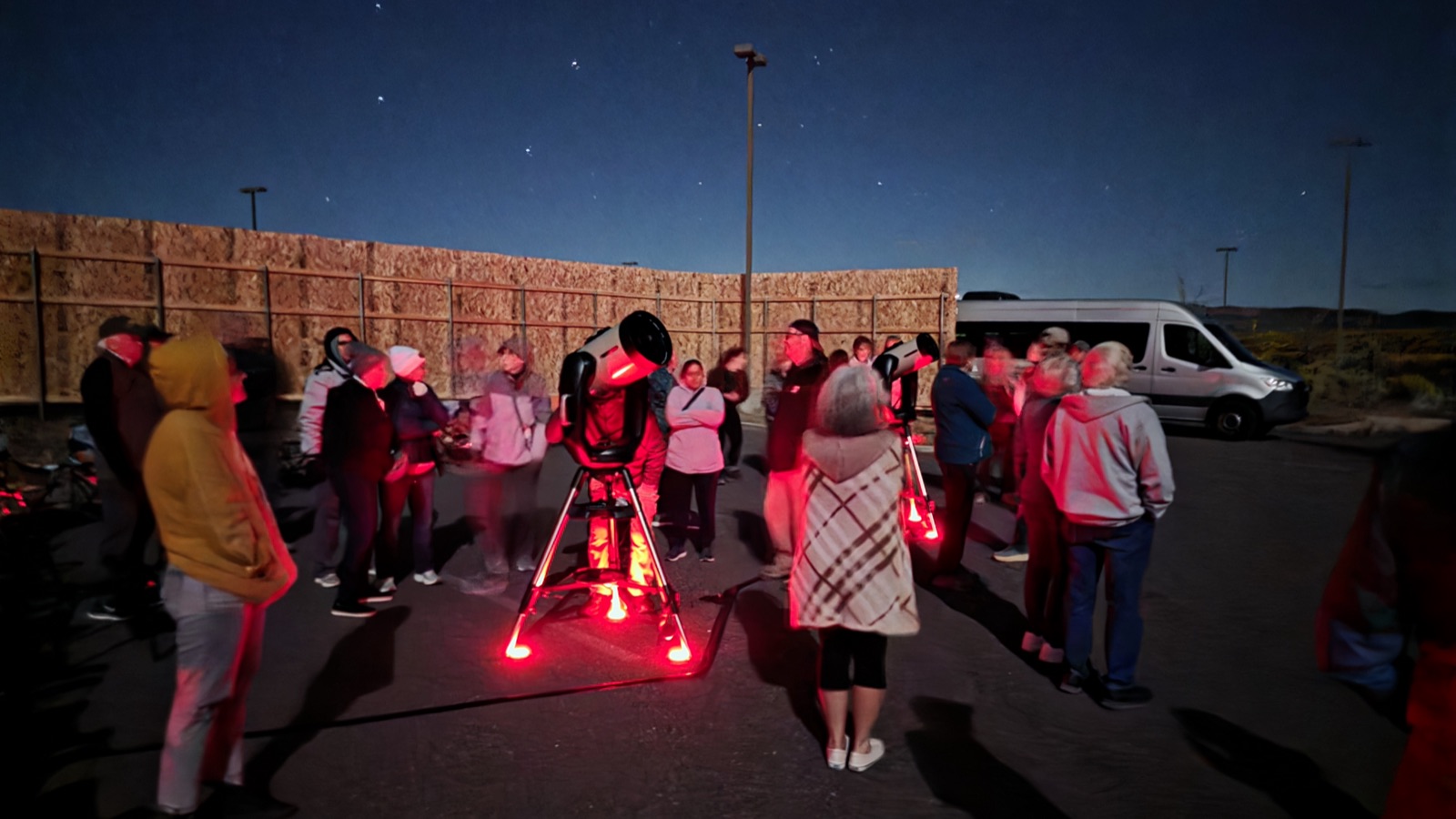
Bryce Canyon's astronomy rangers — the park's "Dark Rangers" — have been doing night sky interpretation longer than almost any park in the system, and it shows. A typical evening program pairs an indoor or amphitheater presentation (light pollution, the scale of the universe, why Bryce's sky is special) with outdoor constellation tours and, on telescope nights, views through park and volunteer scopes. The park runs on the order of 100 astronomy programs a year, concentrated in the warmer months, plus full moon hikes and the June Astronomy Festival, when the program count and telescope fields scale way up.
The honest strengths: it's free with your park entrance fee, the interpretive quality is high, and there's something special about astronomy taught by the agency that protects the sky you're under.
The honest limits: programs follow a fixed schedule set by the park — you fit your night to theirs. Capacity is finite and popular dates can fill up, sometimes via sign-ups earlier that day. Offerings thin out dramatically off-season. Groups can be large, which means telescope views are often a brief look in a long line. And if weather scrubs the night, there's no rebooking — the program simply doesn't happen.
What a Private Tour Is
A private guided tour with Bryce Canyon Stargazing is built the other way around: the night is fit to you. You pick the date when you book; tours run through the seasons rather than only in summer; and groups stay small enough that everyone gets real time at the telescope with a guide standing next to them answering questions — not a 20-second glance before the line moves.
The depth is different, too. With a small group, a guide can adapt to who's there: keep it simple and visual for kids, go deep on astrophysics for the curious, plan the telescope targets around what's best placed that week, and time the session around moonrise. If you care about photos, guides can also help you get a usable Milky Way shot — a nice complement to our night photography guide.
The honest limits: it costs money, and like every astronomy experience on Earth, it's weather-dependent — though a private operator has flexibility a fixed park schedule doesn't, like adjusting timing or rescheduling where the calendar allows.
Side by Side
| Factor | NPS Ranger Programs | Private Guided Tour |
|---|---|---|
| Cost | Free with park entry | Paid (per-person tour pricing) |
| Dates | Fixed park schedule, mostly warmer months | You choose; runs across seasons |
| Availability | ~100 programs/year; popular nights fill up | Book ahead; new-moon dates go first |
| Group size | Often large, especially in summer | Small by design |
| Telescope time | Brief views, shared lines on scope nights | Extended, guided views per guest |
| Personalization | One program for everyone | Adapted to your group and interests |
| If weather interferes | Program canceled, no alternative | Operator flexibility to adjust or rebook |
When the Ranger Program Is the Right Choice
- Budget is the constraint. Free is free, and the quality is real.
- Your schedule is flexible. If you can shift your evening to match the park calendar and arrive early enough to claim a spot, you'll have a good night.
- You mainly want the story, not the scope. The interpretive talks stand on their own even without telescope time.
When a Private Tour Is the Right Choice
- Your dates are fixed. One or two nights in the area is the most common Bryce itinerary, and the ranger calendar may simply not line up.
- You're visiting outside peak season. Fall through spring, private tours are often the only guided option — and those crisp off-season skies are spectacular.
- You want real telescope time. Saturn's rings deserve more than 20 seconds.
- You're with kids, a group, or a photographer. Small groups let the guide actually tailor the night.
- It's festival week. During the June Astronomy Festival, park programs are at their fullest; a private tour guarantees your guided night regardless of crowds.
The Both/And Play
If you have two nights: do a ranger program on one (check the schedule at the visitor center when you arrive) and a private tour on the other. The ranger program gives you the park's own telling of its dark-sky story; the private tour gives you depth, telescope time, and a night built around your group at one of the best spots on the rim. They're complements, not competitors — and the sky is good enough here to fill both nights without repeating itself.
Reserve Your Guided Night
Small groups and new-moon weeks book out first, June through September especially. Reserve early.
Book a Stargazing Tour